
Last updated November 4, 2026
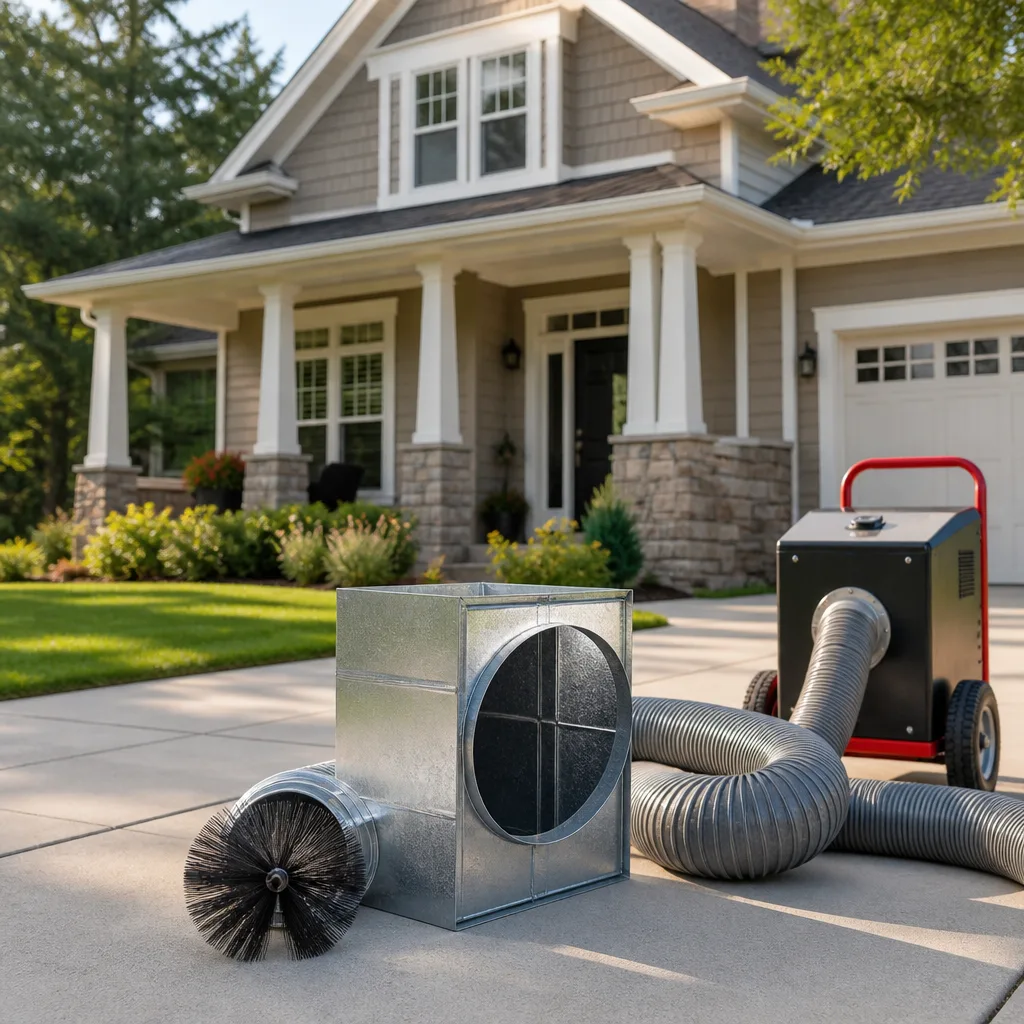 Whole-home duct cleaning
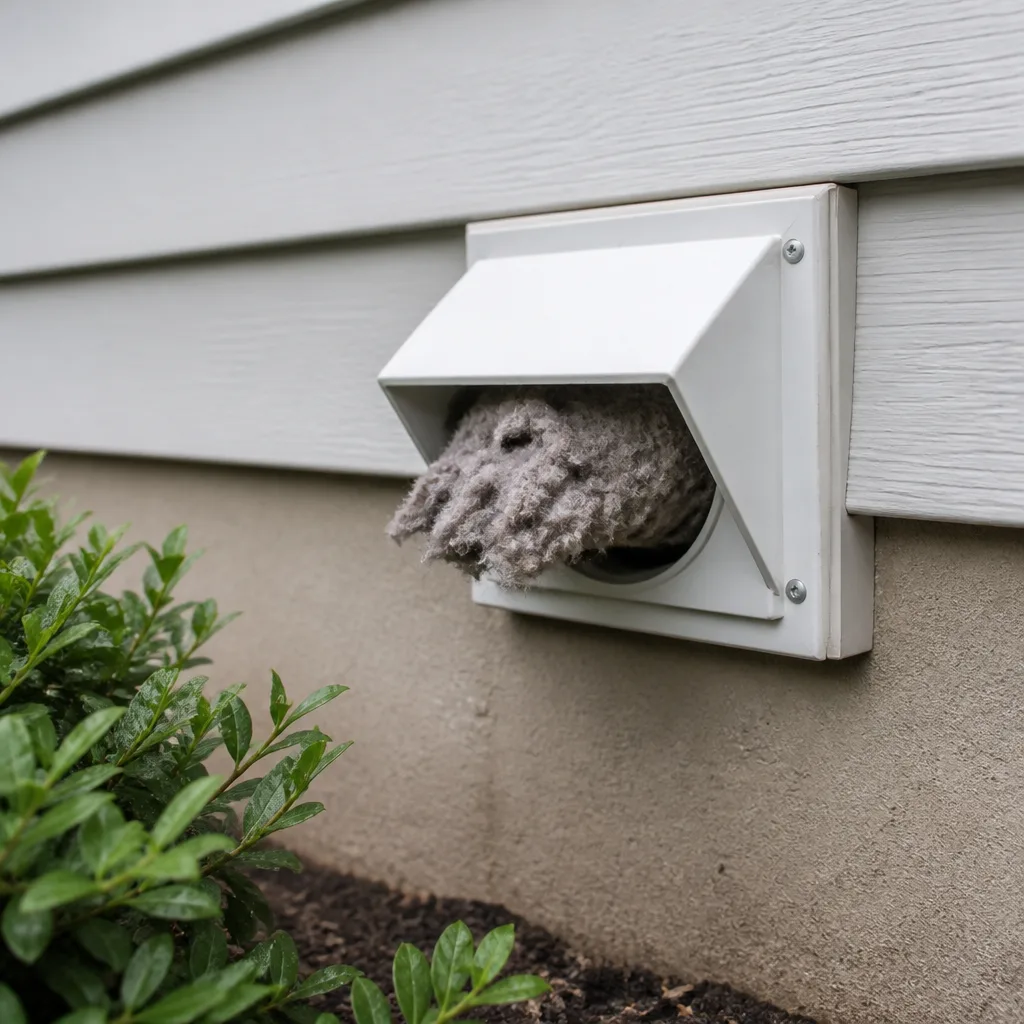 Dryer vent cleaning
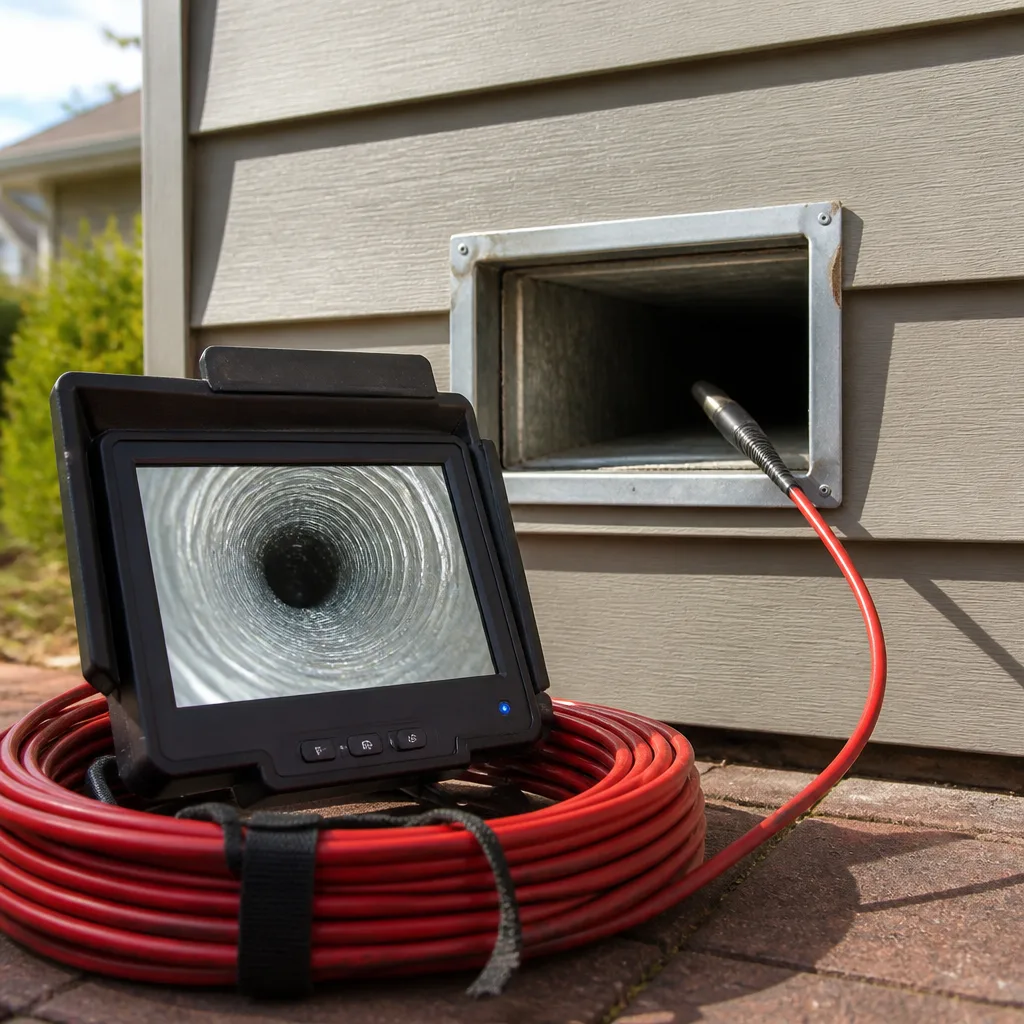 Camera inspection
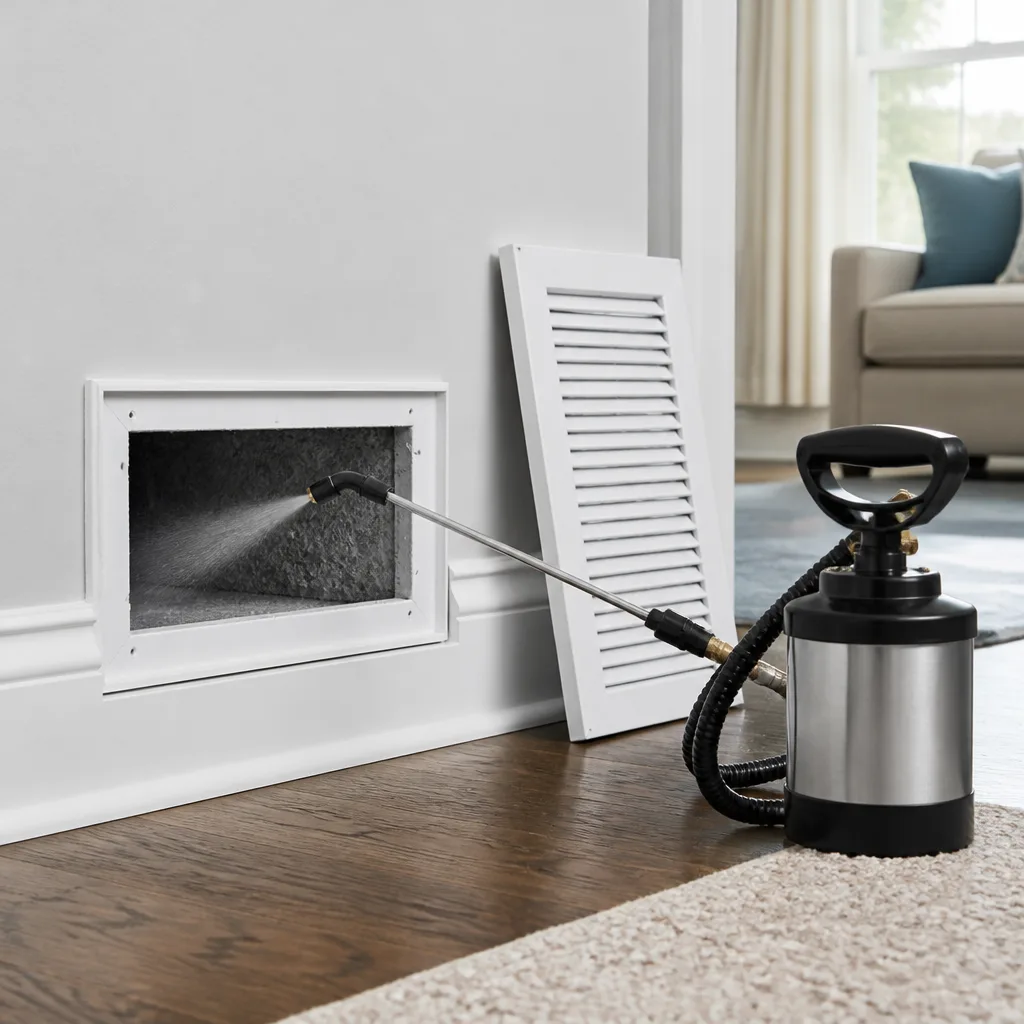 Sanitizing & deodorizing
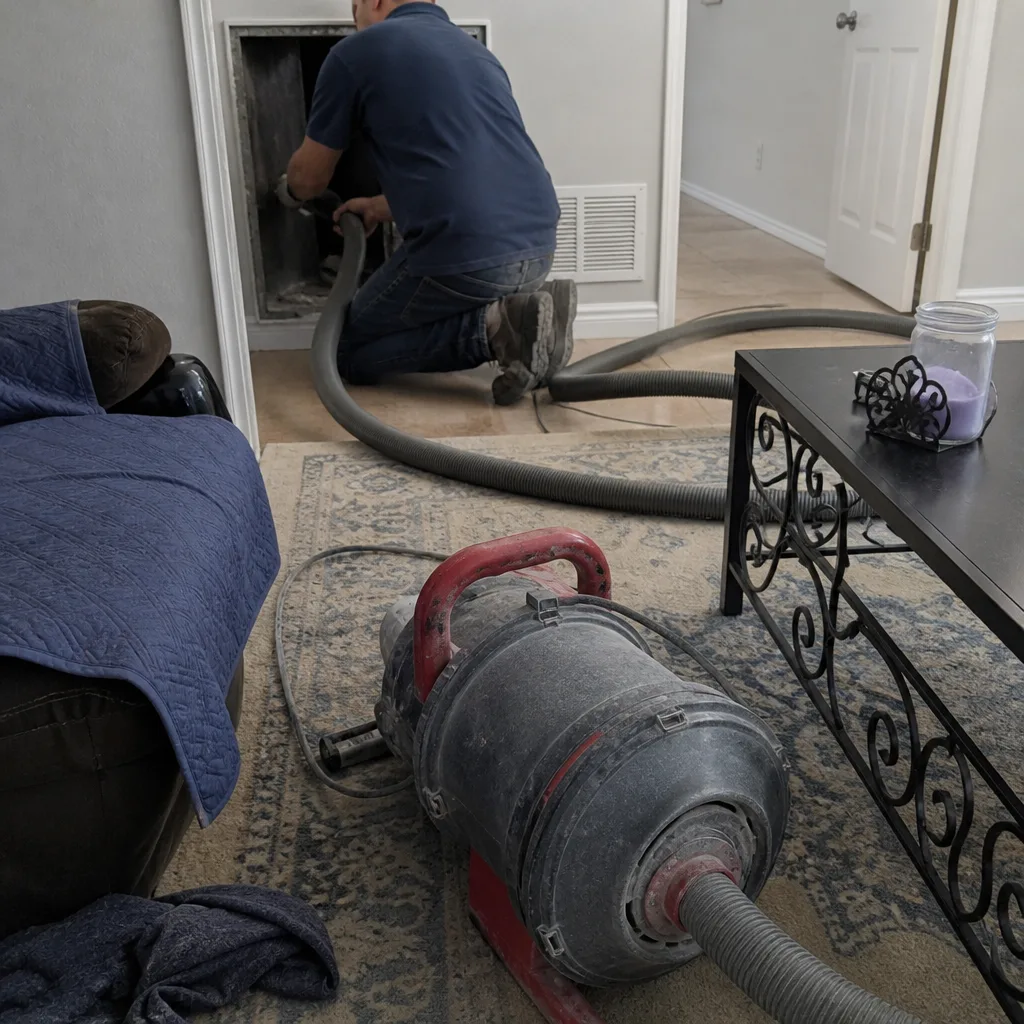
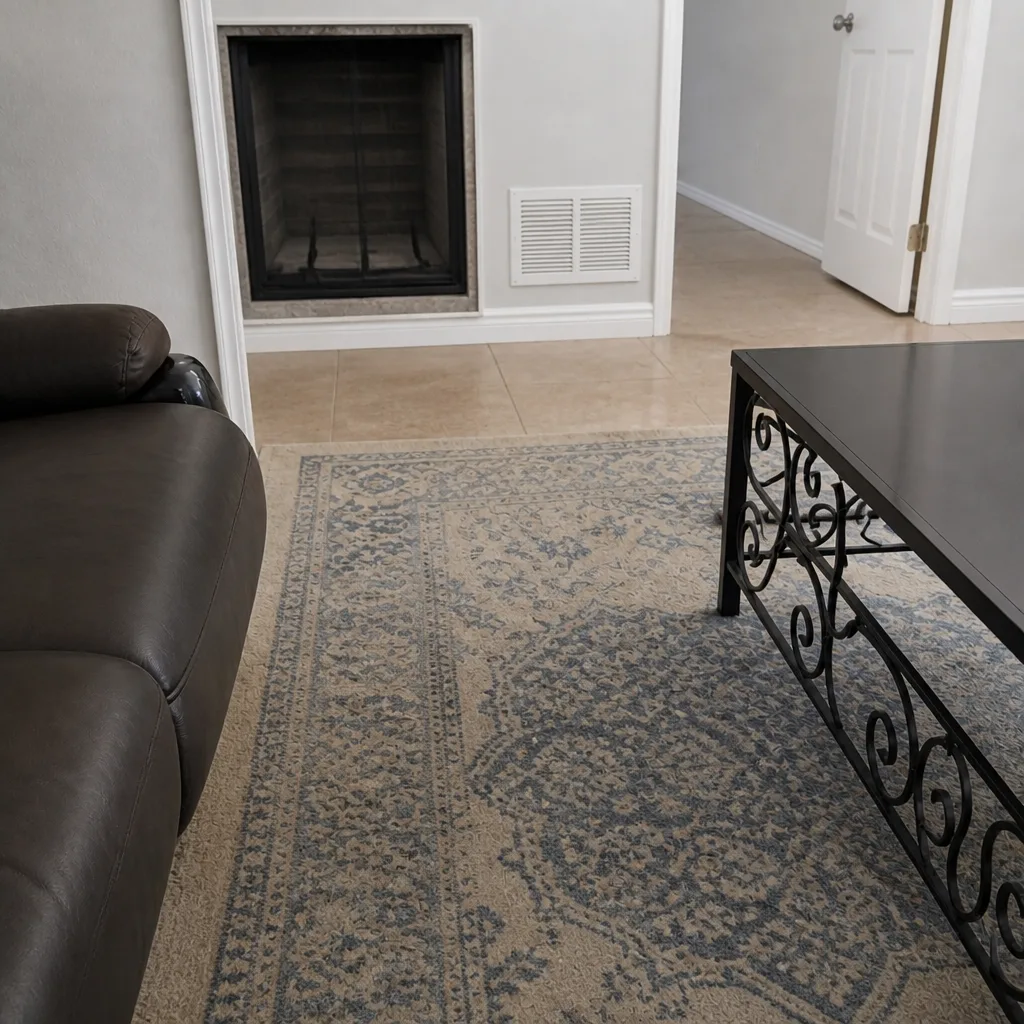
Whole-system duct and dryer vent check with before-and-after photos - you see exactly what came out of your vents
That "$99 whole-house special" is a bait ad - the real number appears once they are in your hallway, or the "clean" is a shop-vac at the register. We photograph the inside of your ducts before and after instead.
DIY vs Professional Air Duct Cleaning: The Moreno Valley Homeowner’s Decision Guide
Most Moreno Valley homeowners who attempt DIY duct cleaning aren’t failing because they lack mechanical skill. They’re failing because the tools available at the local hardware store physically cannot do the job. A consumer shop vac generates roughly 60 to 80 cubic feet per minute of airflow. A professional negative air machine pulls 1,000 to 2,000 CFM. That’s not a modest upgrade. That’s a 15x to 25x difference. Without that level of suction, you’re not extracting debris from your ducts. You’re loosening it and letting your HVAC blower push it into every room of your house. This guide will show you where the line between DIY and professional really sits, using the physics of airflow as the measuring stick.
Styles & brands we work with
- Whole-home duct cleaning
- Dryer vent cleaning
- Camera inspection
- Sanitizing & deodorizing
Quick Answer
DIY air duct cleaning in Moreno Valley works for surface-level tasks like vacuuming return grilles, wiping supply registers, and clearing a visible dryer vent lint trap. It does not work for cleaning the interior of duct runs, because consumer vacuums cannot create the negative pressure required to pull consolidated debris out of the duct system without redistributing it into your living space. Professional equipment, specifically HEPA-filtered negative air machines running at 1,000 CFM or higher paired with rotary brush agitation, is the only reliable way to actually remove debris from duct interiors.
Table of Contents
- The Physics That Separates Real Duct Cleaning From Theater
- What DIY Duct Work Legitimately Accomplishes
- The Rental Equipment Reality Check
- The Moreno Valley-Specific Risk Factor
- The Four Conditions Where Professional Cleaning Is Non-Negotiable
- What Professional Duct Cleaning Actually Costs vs. DIY Attempts
- Common Mistakes to Avoid
- When to Call a Professional
- Frequently Asked Questions
- The Bottom Line
The Physics That Separates Real Duct Cleaning From Theater
Here’s what actually happens inside a duct system when it gets dirty. Your HVAC blower moves air through the return side, across the evaporator coil or heat exchanger, and out through supply ducts to every register in the house. Along the way, the air carries particles: dust, skin cells, pet dander, fibers from carpet and clothing, and in Moreno Valley, a fair amount of fine desert sediment that gets tracked in and pulled into the return air stream. Over years, some of that material settles and adheres to duct walls. The interior surfaces of most residential ducts are galvanized steel or flex duct with a corrugated plastic liner. Neither surface is smooth. Debris catches, builds up, and eventually forms a layer that reduces airflow and recirculates particles every time the system cycles on.
Effective duct cleaning requires two things happening simultaneously. First, the entire duct system must be placed under negative pressure. That means a powerful vacuum is connected to the main trunk line near the air handler, creating suction strong enough that every register is pulling air inward rather than pushing air outward. Second, while that negative pressure holds, an agitation device is inserted through each register to physically dislodge debris from the duct walls. The loosened material is immediately drawn toward the vacuum and into a HEPA-filtered containment system.
A shop vac reverses that equation. It creates localized suction at one register opening at a time, but the rest of the duct system remains at whatever pressure your HVAC blower produces when it’s running. If the system cycles on while you’re working register-by-register, the blower pushes dislodged debris down the line and out through the other registers. You’ve converted a contained cleaning problem into a whole-house distribution event. The debris you loosened in the bedroom supply run is now settling on the couch in the living room.
Professionals solve this with equipment built for the task. At Duct Cleaning Moreno Valley, every job uses a Rotobrush rotary brush system paired with negative air setup. The Rotobrush head spins at high RPM inside the duct, scrubbing the walls loose, while the negative air machine simultaneously pulls everything toward the vacuum. This is the standard professional approach because it works on consolidated debris that has been sitting in ducts for years, not just the loose dust a vacuum hose might grab at a register opening.
What DIY Duct Work Legitimately Accomplishes
None of this is to say homeowners can’t do anything themselves. There’s a meaningful set of tasks that DIY genuinely handles well, and doing them regularly stretches the interval between professional cleanings. Here’s what a homeowner with a standard shop vac and a few basic tools can actually accomplish:
- Register and grille removal and cleaning. Take down every supply register and return grille in the house. Soak them in warm water with a degreasing dish soap, scrub them with a brush, and let them dry before reinstalling. This removes the visible dust crust that accumulates on register faces and improves airflow immediately.
- Return grille surface vacuuming. The return grille is the most dust-loaded surface in the house because every cubic foot of air your HVAC moves passes through it. Vacuum it thoroughly with the brush attachment. For buildup in the grille slots, a soft-bristled paintbrush loosens what the vacuum misses.
- Dryer vent lint trap maintenance. The lint trap inside the dryer cabinet should be cleaned after every load. The vent connection behind the dryer and the first few feet of duct visible behind the appliance can be vacuumed from the exterior vent hood with a standard shop vac. This is a fire-safety task, not a performance task, and it’s worth doing monthly if you do laundry daily.
- Filter replacement. This is the single highest-leverage DIY act in HVAC maintenance. In Moreno Valley, where summer cooling runs your system hard from May through October, a clean filter dramatically reduces the particulate load entering the system in the first place. Check monthly during peak cooling season and replace when visibly loaded.
What these tasks share is that none of them require negative pressure. They’re all surface-access work. The debris is visible, reachable, and removable with consumer equipment. If that’s the scope of what you’re trying to accomplish, DIY works and there’s no reason to pay a professional for it.
The line gets crossed when the debris is inside duct runs you can’t reach with a vacuum hose from a register opening. At that point, the physics shift, and DIY tools stop being less effective and start being counterproductive.
The Rental Equipment Reality Check
Some homeowners considering DIY duct cleaning look at rental equipment as a middle path. Big-box stores and equipment rental yards in the Riverside and Moreno Valley area sometimes have commercial-grade vacuums available by the day. The thinking goes that a rented commercial vacuum gets professional suction at a DIY price. The reality is more complicated.
Here’s what a typical commercial rental vacuum delivers if you know what to look for. A standard heavy-duty wet/dry commercial vacuum, even a large one, tops out around 150 to 250 CFM at the intake. A professional negative air machine used for duct cleaning starts at 1,000 CFM and many run higher. The rental unit gives you maybe a quarter of the suction required to establish meaningful negative pressure across an entire duct system. And crucially, it’s pulling through a 2.5-inch hose, not a sealed connection to the main trunk line. You can hold that hose at a register and create strong local suction, but you’re back to the shop vac problem: localized pull, no system-wide containment.
The second problem is agitation. Professional duct cleaning equipment pairs suction with mechanical scrubbing. The Rotobrush system feeds a rotating brush head down each duct run from the register side. That brush head spins at high RPM, breaking loose the layer of debris that has adhered to duct walls over years of air movement. A rental vacuum gives you nothing to scrub with. You can push a vacuum hose down a duct run and fish around, and you’ll pull out whatever is already loose. The consolidated layer stays put. The debris that comes out makes you feel like progress is happening, but you’ve only removed the material that was going to blow into the house eventually anyway. The actual cleaning never happened.
We stock and deploy Nikro equipment, which is the same industry-standard system professional duct cleaners use nationwide. The difference between that and a rental vacuum isn’t a matter of degrees. It’s a different category of machine designed for a different category of work.
The Moreno Valley-Specific Risk Factor
Moreno Valley sits in a position where wildfire smoke from the San Bernardino National Forest and the hills to the north and east can settle into the basin and linger for days or weeks during fire season. That smoke carries PM2.5, fine particulate matter under 2.5 microns that penetrates deep into lung tissue, along with combustion byproducts including polycyclic aromatic hydrocarbons and volatile organic compounds. When wildfire smoke hangs over the valley, your HVAC system is pulling that air through the return and across the filter. Some of it settles in the duct system.
This matters for two reasons. First, post-smoke duct contamination isn’t ordinary household dust. It’s a complex mixture of partially combusted organic matter, and disturbing it without proper containment creates an exposure risk that’s categorically different from kicking up dust bunnies. Second, the particles are small. PM2.5 passes through standard consumer vacuum filters. A shop vac rated for fine dust still exhausts a meaningful percentage of sub-micron particles back into the room, which means you’re aerosolizing the exact material you’re trying to remove.
Professional air duct cleaning with HEPA filtration captures these particles at the source. Negative air machines pull contaminated air through HEPA filters before it’s exhausted, which in a smoke-contaminated system is not a nice-to-have. It’s the difference between removing the contaminant and spreading it through the house. Our equipment includes Abatement Technologies air filtration units, which are designed for containment-level air scrubbing and can be deployed on jobs where particulate containment matters. That capability exists specifically because some duct systems need more than a vacuum pass.
If your home was in a Moreno Valley neighborhood that experienced extended smoke exposure during a recent fire season, and you haven’t had the ducts cleaned since, the material in your duct system is not the same as the material in a house that’s just accumulated years of ordinary dust. Treat it accordingly.
The Four Conditions Where Professional Cleaning Is Non-Negotiable
Most duct cleaning decisions are judgment calls. These four are not. If any of these conditions applies, professional cleaning is the only responsible option:
- Post-construction or major renovation. Drywall dust, sawdust, insulation fibers, and paint overspray inside duct systems after construction. Drywall dust is fine enough to pass through a furnace filter and it sets up like a powder coating on duct walls once it mixes with system humidity. This material will not come out with a vacuum hose. It requires rotary brush agitation plus negative pressure. If you’ve renovated in Moreno Valley and didn’t have the ducts cleaned after, this is your signal.
- Post-smoke event. As covered above, wildfire smoke contamination contains PM2.5 and combustion byproducts. Disturbing this without HEPA containment spreads it through the house. Professional equipment captures it. DIY agitation aerosolizes it into the rooms where your family spends time.
- Confirmed rodent intrusion. Rodents in duct systems leave behind nesting material, droppings, and urine. Dried rodent droppings crumble into fine particles that carry hantavirus risk. You do not want to vacuum this with a shop vac that exhausts fine particles back into the room. Professional removal requires HEPA containment, and in severe cases, full duct replacement. If you’ve heard scratching in the attic and find evidence inside a supply run, professional cleaning is the minimum necessary step, and replacement may be the honest answer.
- Visible biological growth. If you can see mold-like growth on duct surfaces, register faces, or around the air handler, do not disturb it yourself. Agitating biological growth without containment disperses spores through the entire system. Professional assessment with HEPA-filtered equipment and professional judgment on whether cleaning or replacement is appropriate is the only responsible path.
Outside these four, it’s a maintenance decision. If your ducts have never been cleaned and the house is more than ten years old, professional cleaning delivers measurable airflow improvement and particulate reduction. If you’re in a newer home or had professional cleaning in the last several years, DIY maintenance at the registers and grilles is a reasonable interim step. The goal is honest assessment, not either always-DIY or always-pro.
What Professional Duct Cleaning Actually Costs vs. DIY Attempts
There’s a reason the duct cleaning industry has a reputation problem. Some companies advertise a low per-vent rate or a whole-house teaser price, then arrive and find reasons to escalate the invoice once the truck is in the driveway. Their techs show up with a shop vac mounted in a van and charge professional rates for DIY equipment. Moreno Valley homeowners who’ve heard these stories are right to be skeptical.
A legitimate professional duct cleaning involves equipment that is too large and too specialized to fit in a van alongside a shop vac. The negative air machine alone is a freestanding unit that gets wheeled in and connected directly to the main trunk. The rotary brush system runs on a separate feed. HEPA filtration canisters sit between the vacuum and the exhaust point. Jobs run several hours, not 45 minutes. This is the work you’re paying for when you hire a contractor using Rotobrush and Nikro equipment.
Typical professional air duct cleaning for a single-family home in the Moreno Valley market runs in the range of $450 to $900, depending on the number of systems, the number of returns, accessibility of the mechanical room, and whether the system has never been cleaned or is on a maintenance schedule. Homes with two HVAC systems, which are common in larger Moreno Valley floor plans, will be at the higher end or beyond. A single-system ranch or smaller two-story will usually land in the middle. These are typical ranges, not quotes. The written estimate sets the final price.
Compare that to a serious DIY attempt. A quality shop vac runs $120 to $250. A rental vacuum runs $40 to $80 per day. You’ll spend a Saturday, you’ll remove what’s reachable at the registers, and you’ll leave the consolidated debris in the duct runs untouched. That’s not an argument against DIY maintenance. It’s an honest accounting of what DIY maintenance buys. The question isn’t whether a shop vac costs less than a professional cleaning. It’s whether it does the same job. It doesn’t.
If you’re weighing the decision, one number matters most: what’s the actual CFM at the point of use? If it’s not above 1,000 and filtered through HEPA, it’s not professional-grade suction no matter how it’s advertised.
Common Mistakes to Avoid
- Cleaning registers with the HVAC blower running. This is the fastest way to distribute dislodged debris through the entire duct system and every room downstream. Turn the system off at the thermostat before touching any register, and leave it off until you’re done.
- Using a leaf blower in a register. It seems like a clever way to push debris out, but a leaf blower pressurizes the duct system and forces fine particulate through every gap, crack, and register connection into wall cavities and living space. The debris ends up worse distributed than it was before.
- Vacuuming with a standard household filter. Standard vacuum filters pass a high percentage of fine particulate. You’ll see visible dust collected in the canister, but the invisible fine fraction is exhausting into the room you’re working in. If you’re dealing with smoke residue, this is actively counterproductive.
- Assuming visible dust means the system is dirty enough to clean. Some visible dust at registers is normal and comes from room air settling on surfaces, not from the duct interior. The honest signal is debris inside the duct itself, visible with a flashlight at the register opening, or airflow reduction that filter replacement doesn’t fix.
- Hiring the cheapest quote without asking about equipment. The duct cleaning difference between a legitimate professional and a van-based shop vac operation is entirely in the equipment. Ask what negative air machine they use, what CFM it pulls, and whether they use rotary brush agitation. If the answer is vague, the quote isn’t about cleaning. It’s about getting a truck to your driveway.
- Skipping dryer vent cleaning because the dryer still seems to work. A restricted dryer vent doesn’t stop a dryer from running. It makes the dryer run hotter and work harder until the lint accumulation reaches a point where it ignites or the thermal fuse fails. This is a fire-safety maintenance item, not a convenience service. It needs professional attention periodically even if the laundry gets dry.
When to Call a Professional
Call a professional when the scope moves beyond surfaces. That means consolidated debris in duct runs you can’t reach, any of the four non-negotiable conditions above, or a system that hasn’t been cleaned since the house was built. It also means smoke exposure, pet-heavy households where dander has been circulating for years, and homes where someone in the family has respiratory sensitivity that leaves no margin for guessing. At that point, trying to bridge the gap with DIY tools isn’t saving money. It’s spending a Saturday to redistribute the problem more evenly through the house.
Duct Cleaning Moreno Valley offers free estimates in Moreno Valley. Call (877) 387-1334. We answer 24/7. Fast dispatch from 7am to 7pm, Sunday through Friday.
Frequently Asked Questions
You can clean register faces, grille surfaces, and the first few inches of visible duct at openings with a shop vac. You cannot clean the interior of duct runs with a shop vac, because consumer vacuums generate roughly 60 to 80 CFM, which is far below the 1,000+ CFM required to establish system-wide negative pressure. Without that pressure, dislodged debris gets redistributed through the registers rather than extracted. Call (877) 387-1334 for an exact assessment of your system. We answer 24/7. Fast dispatch from 7am to 7pm, Sunday through Friday.
Professional air duct cleaning for a typical single-family home in Moreno Valley typically runs $450 to $900 depending on system count, accessibility, and condition. Two-system homes and homes with deferred maintenance run higher. A legitimate professional quote includes negative air suction, rotary brush agitation, and HEPA filtration, not a van-based shop vac. Your written estimate sets the final price. Call (877) 387-1334 for a free estimate.
Look for visible debris inside the register opening with a flashlight, dust accumulation on register faces that returns within days of cleaning, airflow that seems reduced even with a fresh filter, or any of the four non-negotiable conditions: post-construction, post-smoke event, confirmed rodent activity, or visible biological growth. Outside those signals, a maintenance clean every few years is reasonable in Moreno Valley’s dusty environment. Call (877) 387-1334 and we’ll tell you honestly whether your system needs work.
Lint accumulation in dryer vents is a recognized residential fire hazard, and dryer vent cleaning is a fire-safety service more than a convenience service. Restricted vents force the dryer to run hotter and work longer, and the failure is often silent until the system fails or an ignition event occurs. This is one reason our scope includes dryer vent cleaning alongside air duct work. Call (877) 387-1334 for a quote. We answer 24/7. Fast dispatch from 7am to 7pm, Sunday through Friday.
Duct cleaning removes accumulated debris from the interior surfaces of the duct system, which restores designed airflow and reduces the particulate load circulating during HVAC operation. It doesn’t change the fundamental operation of the system, and it’s not a substitute for filter replacement or equipment maintenance. The measurable outcomes are restored airflow and reduced recirculating particulates, which is verifiable with before-and-after photos of duct interiors. Call (877) 387-1334 for an honest assessment of whether your system would benefit.
Yes. We work throughout Moreno Valley, including the older neighborhoods near the 60, the newer developments on the east side, and the areas along the 215 corridor. The geography of the valley means some homes see more dust from the open areas to the east, and we see the difference in systems depending on where the house sits. Call (877) 387-1334 for a free estimate anywhere in the city.
The Bottom Line
The DIY vs. professional duct cleaning question in Moreno Valley comes down to airflow physics, not effort. Consumer vacuums at 60 to 80 CFM cannot create the negative pressure required to extract debris from duct interiors, and without rotary brush agitation paired to that suction, the consolidated layer on duct walls never comes loose. DIY has legitimate value at the surfaces: registers, grilles, dryer vent lint traps, and filter replacement all deserve consistent homeowner attention. The interior of the duct system belongs to professional equipment, and the four non-negotiable conditions make that call for you. We run Rotobrush and Nikro systems designed specifically for duct cleaning, paired with HEPA filtration and negative air, so the work is equipment-driven rather than prayer-driven. If that’s the standard you’re looking for, call for an estimate and we’ll show you what’s actually in your ducts.
Written by the team at Duct Cleaning Moreno Valley, serving Moreno Valley since 2016.
See the difference
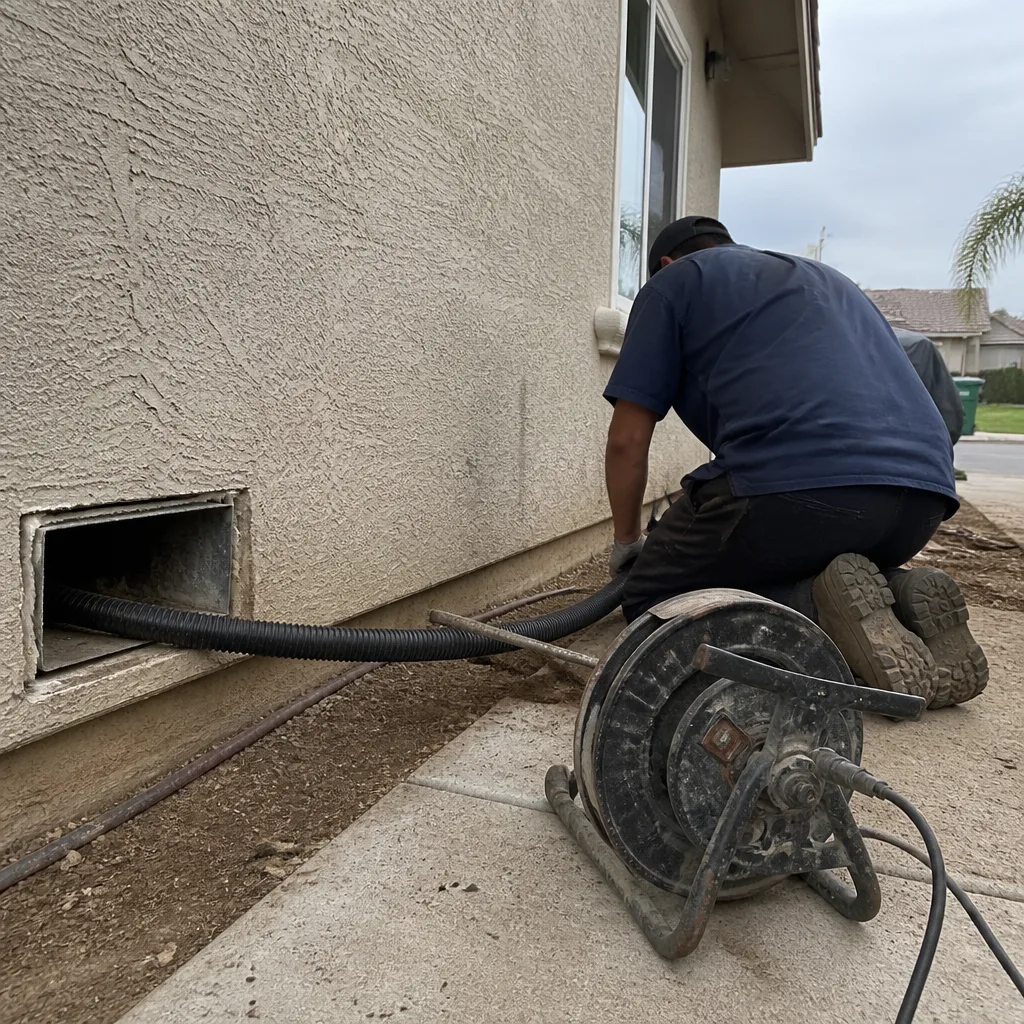 Before
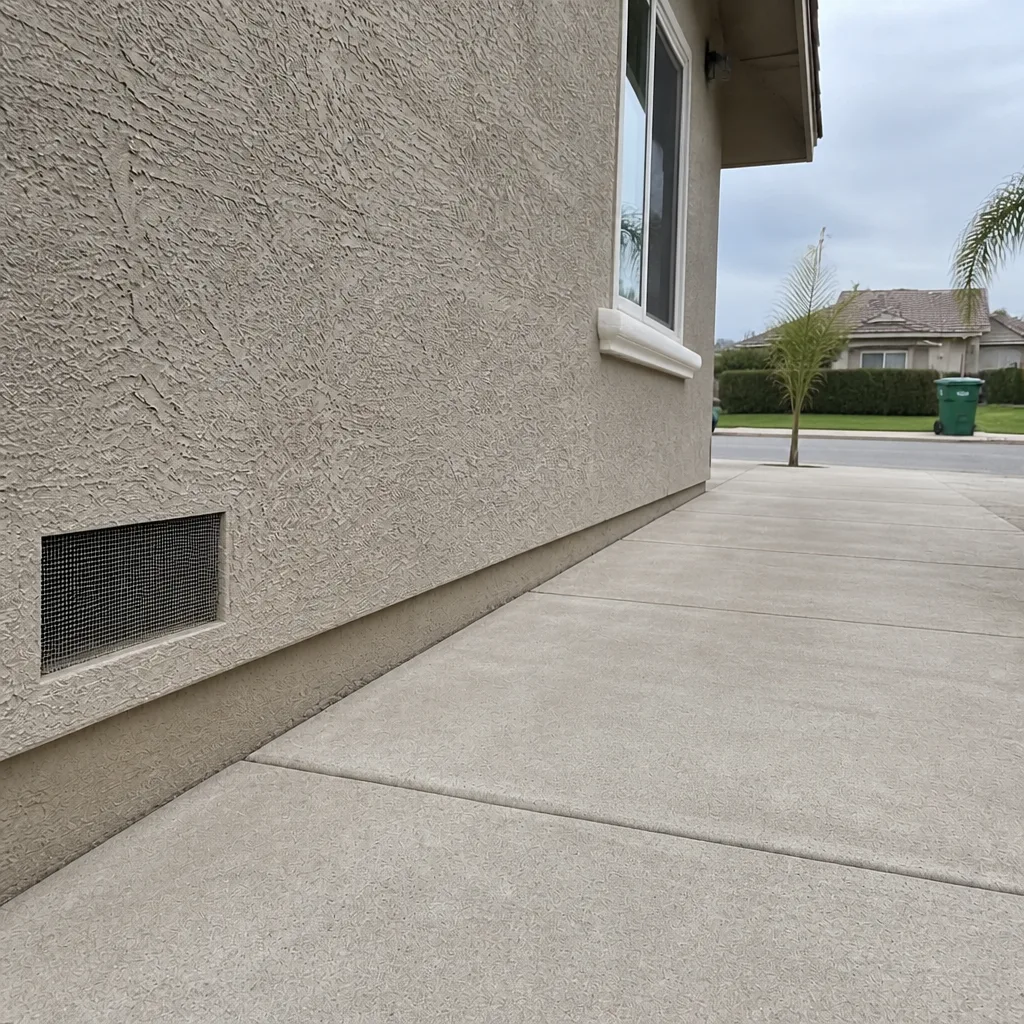 After
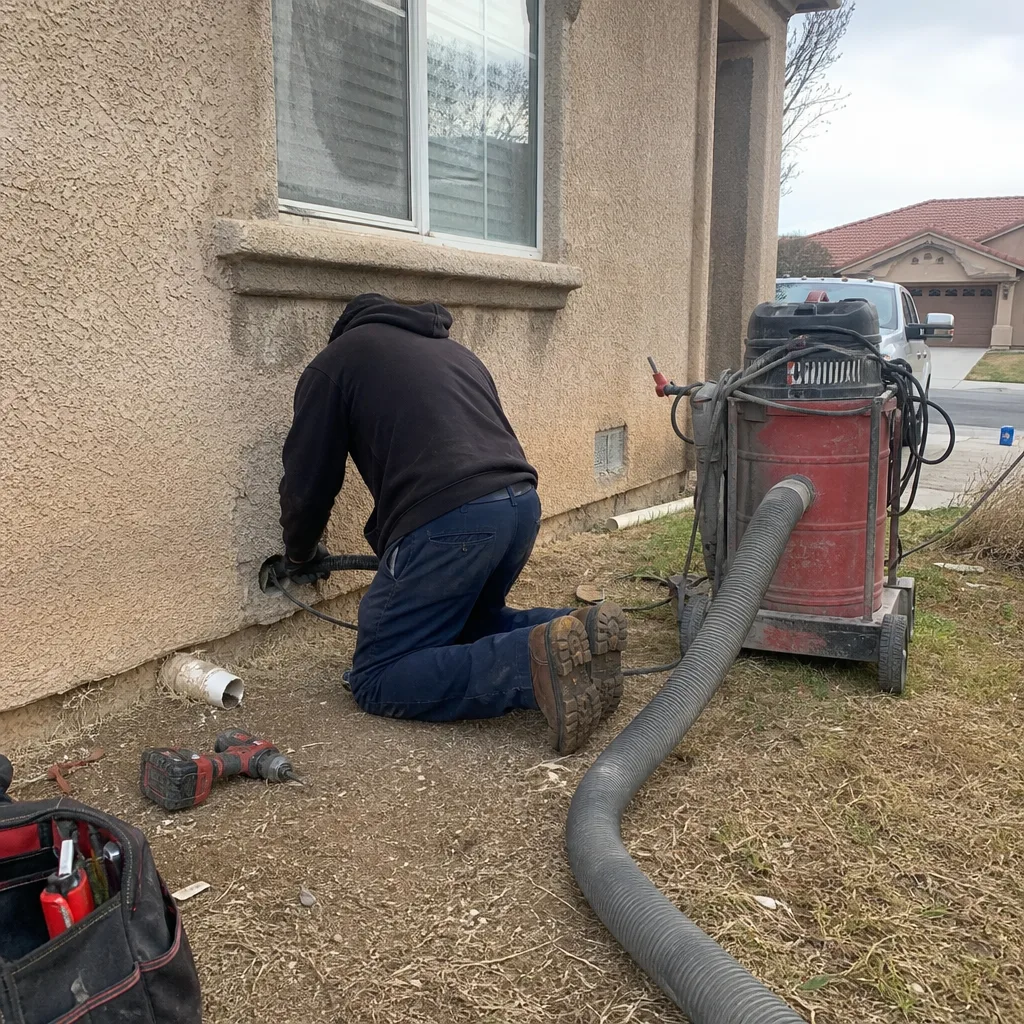 Before
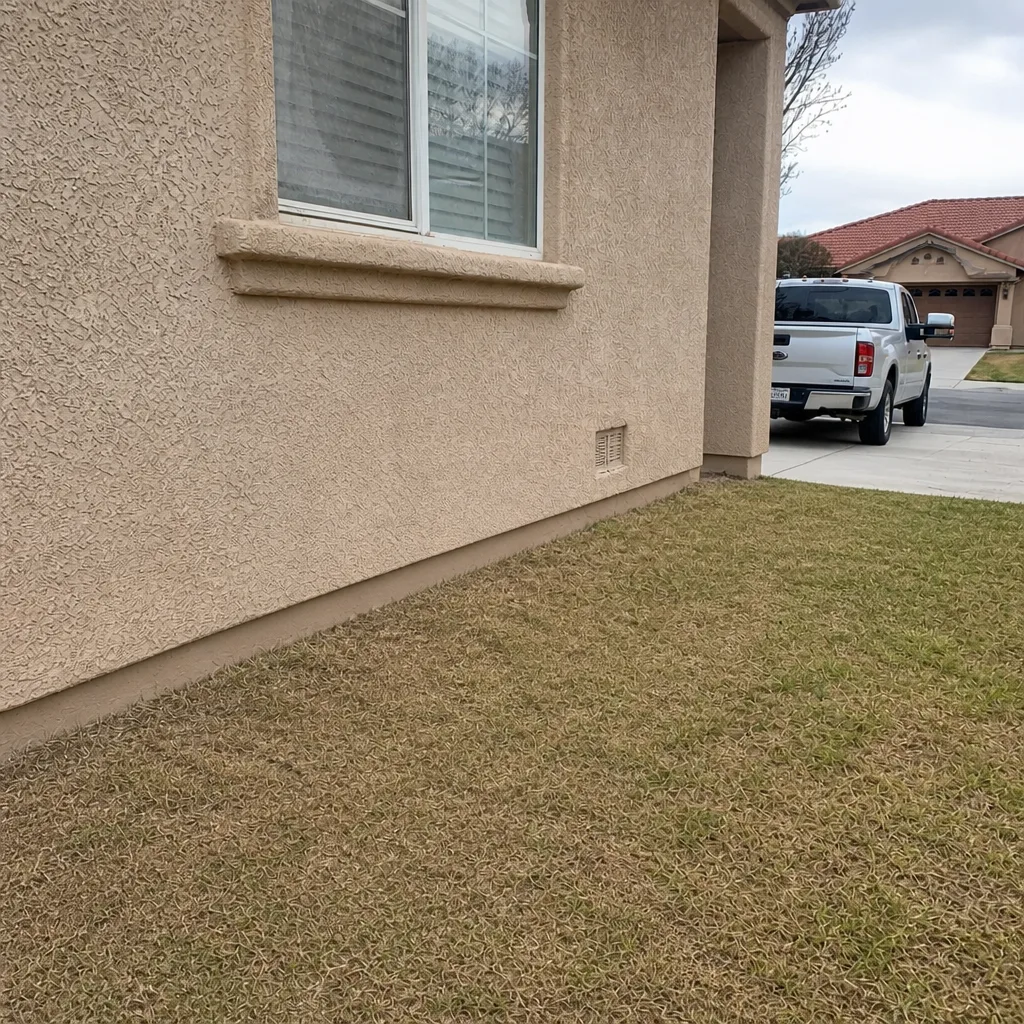 After
 Before
 After