
Last updated November 4, 2026
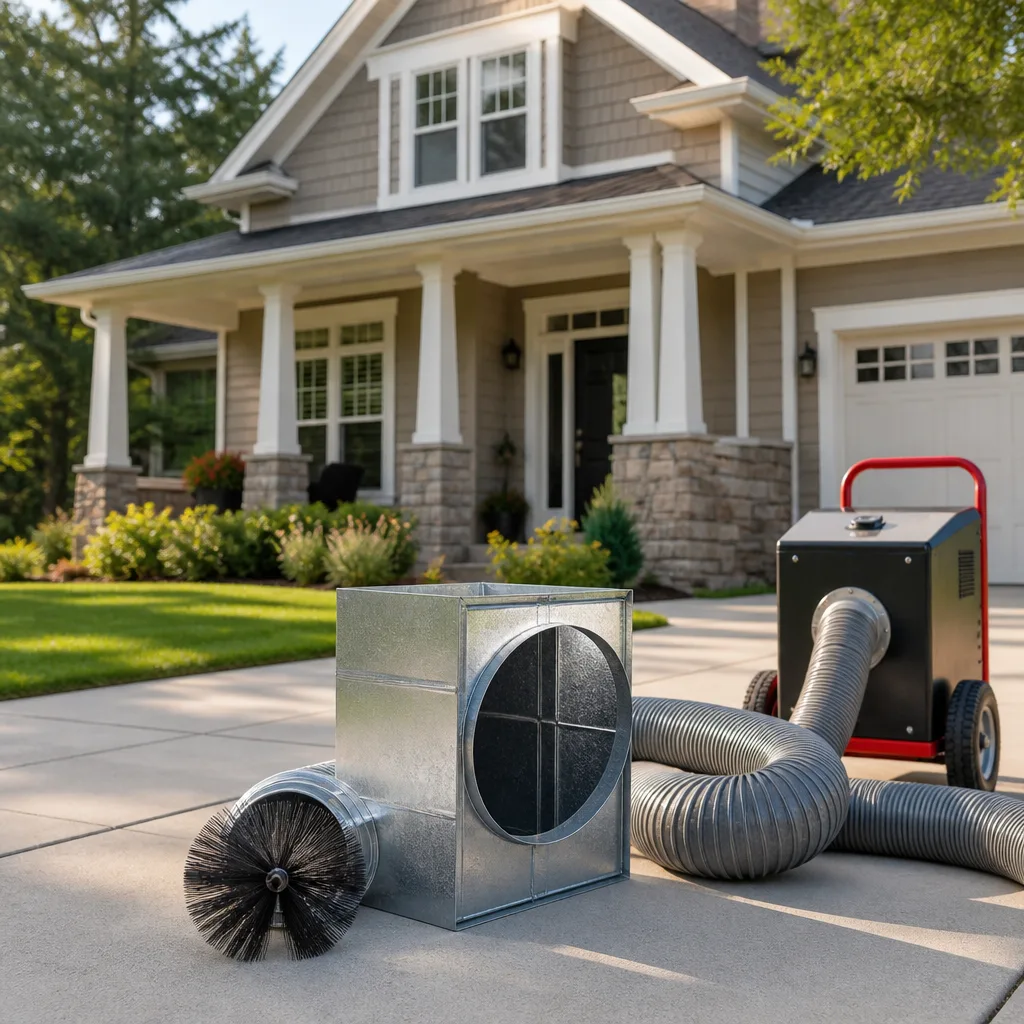 Whole-home duct cleaning
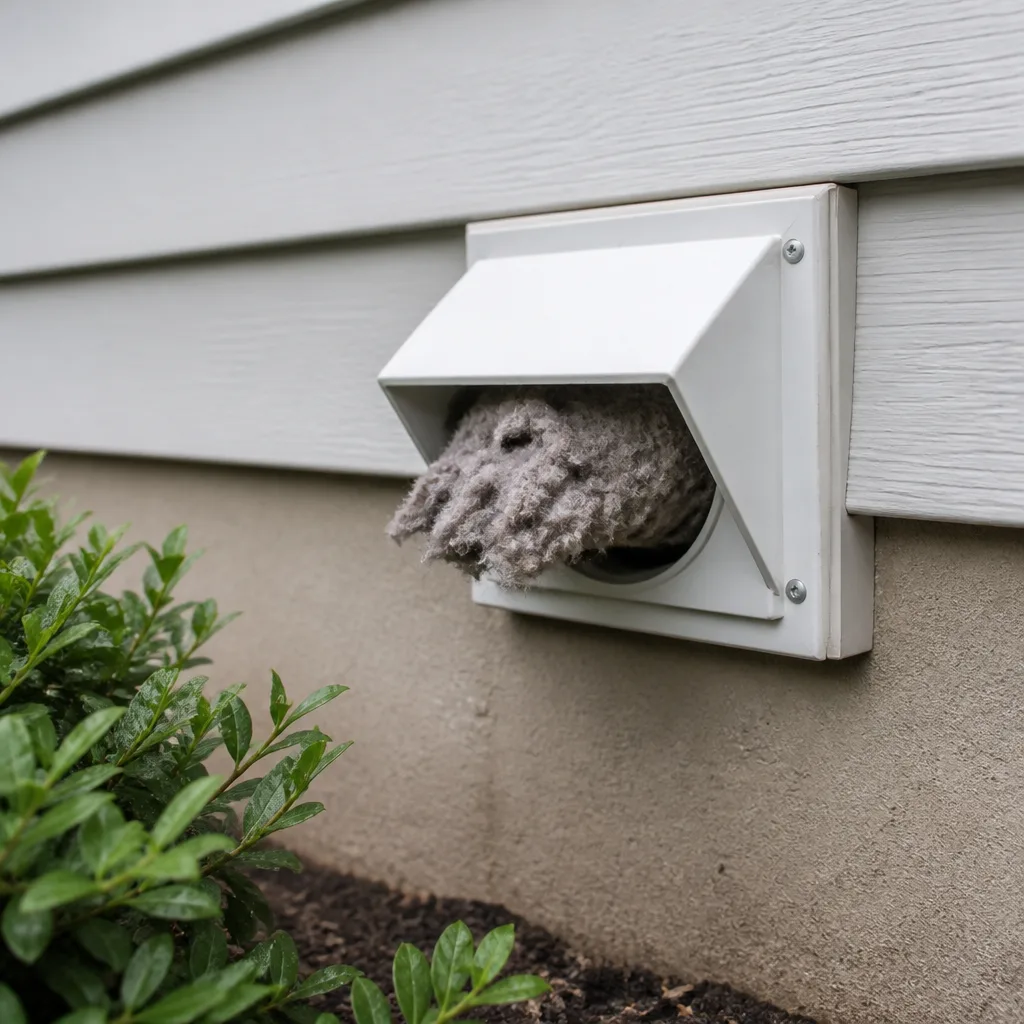 Dryer vent cleaning
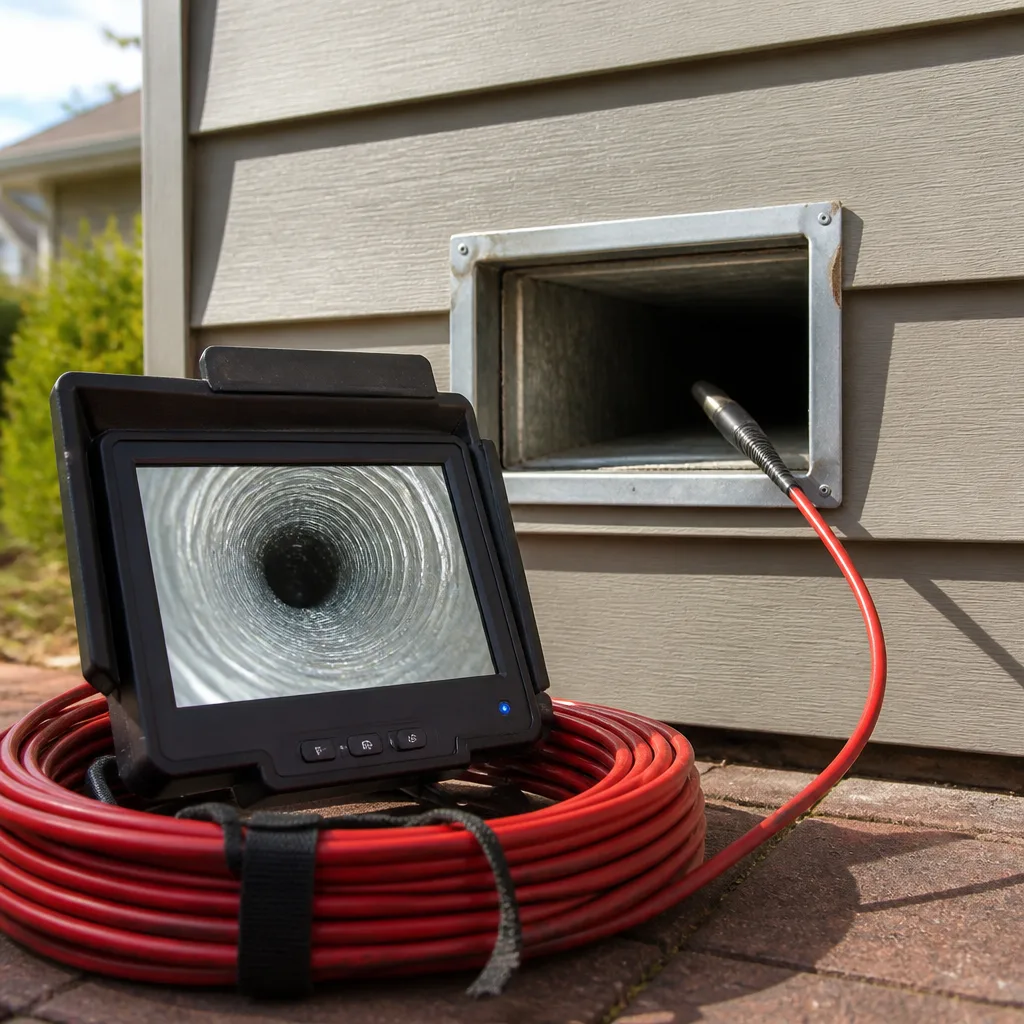 Camera inspection
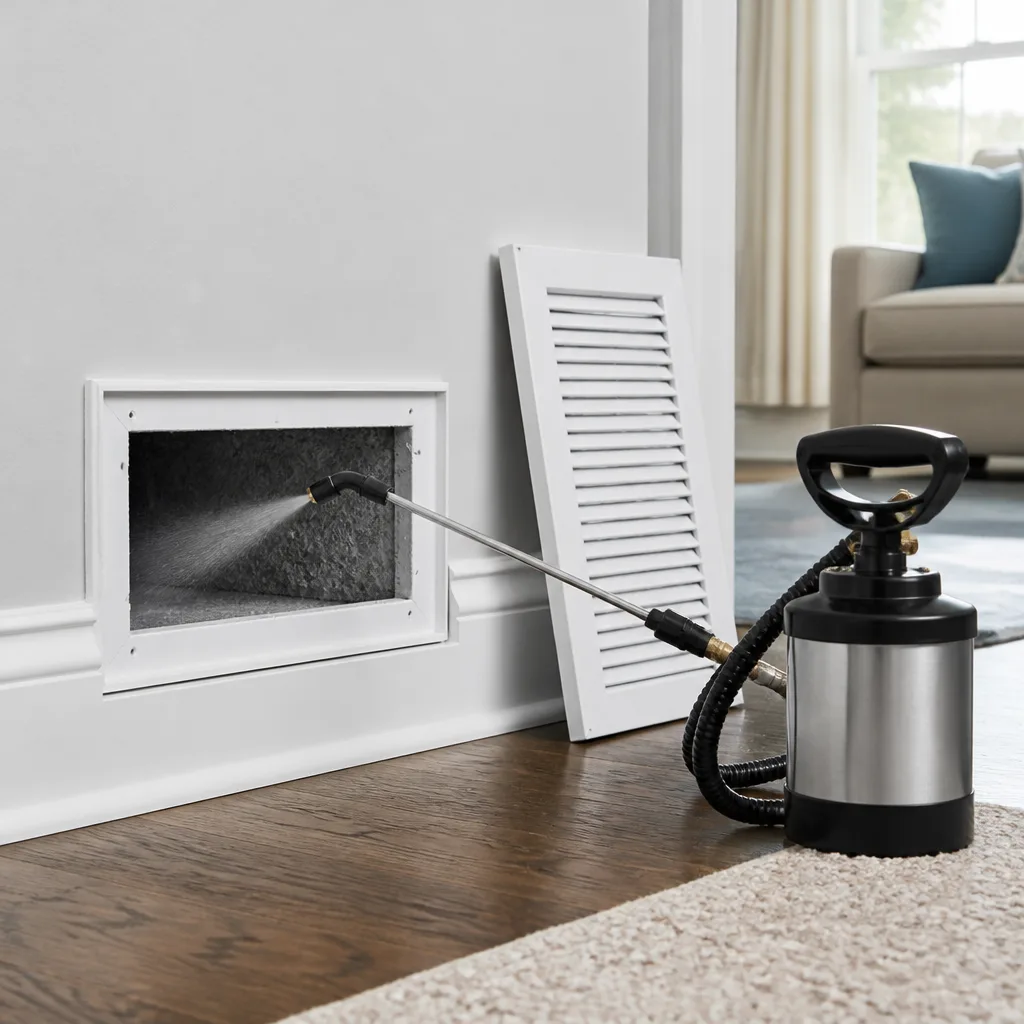 Sanitizing & deodorizing
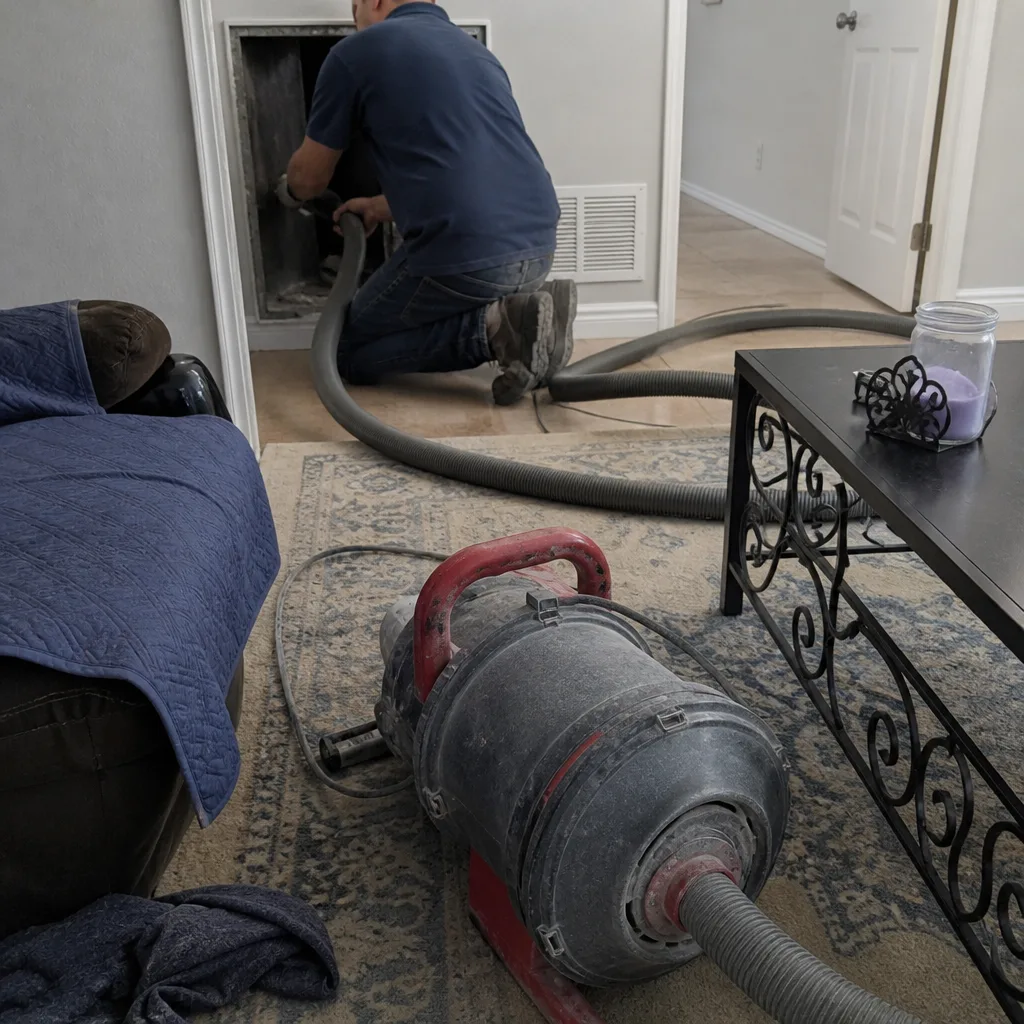
Whole-system duct and dryer vent check with before-and-after photos - you see exactly what came out of your vents
That "$99 whole-house special" is a bait ad - the real number appears once they are in your hallway, or the "clean" is a shop-vac at the register. We photograph the inside of your ducts before and after instead.
Seasonal Air Duct Cleaning Care for Moreno Valley: Year-Round Homeowner’s Guide
Most homeowners in Moreno Valley think their HVAC system has two seasons: summer and not-summer. That assumption quietly costs them money and air quality every single year. What actually happens here is more like four distinct contamination events, each one loading your ductwork with a different kind of debris: spring construction dust from one of the most active building markets in Southern California, summer heat-cycling that bakes that debris onto duct walls, fall Santa Ana winds forcing fine particulate through every exterior penetration, and winter wildfire smoke that infiltrates return air pathways while your system runs at reduced load. This guide walks through each season as its own maintenance chapter, with specific inspection priorities and cleaning protocols for Moreno Valley homes.
Quick Answer
Seasonal air duct cleaning in Moreno Valley is best scheduled around four events: after spring construction activity settles in May, before peak summer cooling load hits in late June, following the first major Santa Ana wind event in October, and after any winter smoke exposure. Because Moreno Valley’s climate creates distinct contamination patterns each season, a single annual cleaning often misses debris that compounds during high-use summer months or wind-driven intrusions in fall. A spring inspection plus a pre-summer cleaning, with targeted filter and return-side service in fall and winter, keeps the whole system healthier than one annual visit ever will.
Styles & brands we work with
- Whole-home duct cleaning
- Dryer vent cleaning
- Camera inspection
- Sanitizing & deodorizing
Table of Contents
- Spring: Construction Dust and Post-Winter Inspection
- Summer: Heat-Cycling and Duct Integrity Under Load
- Fall: Santa Ana Wind Protocol and Debris Intrusion
- Winter: Fire Season Air Quality and Return Air Management
- Year-Round: Filter Loading as a Duct Contamination Gauge
- Why Equipment Matters for Seasonal Cleaning
- Common Mistakes to Avoid
- When to Call a Professional
Spring: Construction Dust and Post-Winter Inspection
Spring in Moreno Valley means building season. Drive through nearly any neighborhood from March through May and you’ll see framing crews, grading equipment, and concrete trucks moving through new developments. All that activity throws a lot of fine particulate into the air: cement dust, drywall dust, and dirt from disturbed lots. Your HVAC system pulls that airborne dust through the return registers and into the ductwork every time it cycles on. Even homes miles from the nearest construction site see elevated particulate levels during spring months simply because the wind carries it across the valley.
Spring is also the right time to address what winter left behind. Moreno Valley winters are mild, and many homeowners run their systems far less between December and February. That low-use period lets moisture accumulate in ductwork from condensation cycles, especially in supply plenums and trunk lines where temperature swings are greatest. When the system fires back up for the first real heat wave of spring, that moisture-laden dust gets baked onto duct surfaces and becomes a hardened layer that resists later cleaning if left too long. Inspecting ducts in spring catches that material before summer heat-cycling fuses it in place.
What to inspect after winter
- Return-side registers and filter boxes: Check for dust caking around the filter frame. A heavy ring of dust around the filter housing means air is bypassing the filter and pulling unfiltered air into the system.
- Supply vent surfaces: Look for gray or brown streaking below supply registers. That indicates debris blowing off the duct walls and onto the vent itself.
- Flex duct sag points: In attics, flex duct sections that have settled or pulled loose during winter create low spots where dust and moisture collect. Spring is the time to have those re-supported before summer heat softens the flex material.
- Outdoor condenser coil area: Spring construction dust clogs condenser coils fast. A coil loaded with dust makes the whole system run longer per cycle, which pulls more air through the ducts and accelerates debris accumulation inside them.
If you’ve noticed more dust on furniture than usual, or family members are sneezing more this spring than last, the ducts are a more likely culprit than the pollen count. We’ve seen systems in Moreno Valley that had acceptable winter airflow show a 20 to 30 percent restriction by May simply from accumulated construction dust that entered during March and April.
Summer: Heat-Cycling and Duct Integrity Under Load
Moreno Valley summers routinely push past 100°F, and your HVAC system responds by running longer cycles, more often, for months at a stretch. That sustained operation puts real stress on the duct system itself, and it changes how debris behaves inside the ducts. The two most common summer issues we deal with are duct integrity failures caused by heat and debris consolidation on supply plenum walls that happens fastest during high-usage months.
Flex duct is the weak point in most Moreno Valley attic installations. Attic temperatures in summer here regularly hit 130°F to 140°F. At those temperatures, the outer vapor barrier on flex duct softens, the insulation compresses, and any sag point becomes permanent. A duct that sagged slightly during spring can develop a full kink or partial collapse by August. When a duct kinks, the airflow drops sharply through that run, and the system compensates by pulling harder through the remaining open ducts. That increases negative pressure, which pulls more dust and debris into the return pathways. Summer is when a small duct problem turns into a whole-system contamination event.
How summer heat changes duct debris
The debris that entered your ducts during spring doesn’t sit there inert. Every cooling cycle condenses moisture on duct surfaces. Dust absorbs that moisture, then bakes onto the duct wall when the system cycles off and attic heat rises. Over dozens of cycles per day, that dust layer hardens into a crust that’s substantially harder to remove than loose debris. This is why a fall cleaning after a long Moreno Valley summer typically costs more and requires more aggressive equipment than a spring cleaning would have. The contamination is the same material, but it’s now cemented to the duct surface.
- Inspect flex duct connections in June: Before the worst heat arrives, have duct connections visually checked for sagging, kinking, or separated insulation. This is a 30-minute attic inspection that catches most summer failures before they happen.
- Check supply plenum walls in early summer: The supply plenum is the sheet metal box directly above your air handler. Debris consolidates here first because it’s the hottest part of the duct system.
- Monitor register airflow in July and August: Hold a tissue near each supply register. If some rooms barely move the tissue while others do, you likely have a restriction somewhere in the duct run set, commonly from a sagging flex duct.
- Document filter loading weekly during heat waves: Write down the filter condition every week during a 100°F-plus stretch. If you see loading accelerate dramatically, that tells you the system is pulling harder through contaminated ducts and pulling more particulate into the return stream.
Fall: Santa Ana Wind Protocol and Debris Intrusion
Santa Ana winds arrive in Moreno Valley every fall, usually sometime between late September and November. These are dry, sustained winds that blow from the northeast, sometimes reaching 30 to 50 mph in the valley. They carry dust and fine debris from the foothills, the dry lake beds to the east, and every unpaved lot between. For your duct system, the concern is not what the Santa Anas blow around outside. It’s what they drive into places that should be sealed: attic penetrations, duct joints, soffit gaps, and any unsealed return pathway. Dry, lightweight particulate moves under sustained wind pressure in ways that normal gravity dust never does.
We treat Santa Ana events as inspection triggers. After any sustained wind event where you can smell dust in the air or see haze on the horizon, check a few specific things in your home before deciding whether the system needs professional service or just a filter swap.
How to assess post-event contamination
- Check the filter before replacing it: Remove the filter and hold it up to the light. A Santa Ana event creates a specific pattern: fine tan or gray particulate crusted evenly across the filter surface, not the normal mix of lint and hair. That fine particulate is the fraction that penetrates deepest into your duct system.
- Inspect return register boxes: Take a register cover off and run a clean white paper towel around the inside of the box. Tan dust inside the return box after a wind event means the return pathway is pulling wind-driven debris directly from the attic or exterior wall cavity.
- Check attic access seals: If you have a pull-down attic stair or an attic hatch, check the seal around it. Santa Ana winds pressurize the attic, and any gap lets that pressurized dust-laden air push down into the living space where the return then pulls it into the ducts.
- Compare room-to-room dust accumulation: After a wind event, wipe a dark cloth across furniture in different rooms. Rooms with supply registers closer to the air handler often show more fine dust if the intrusion came through the return side, because the dust enters the airstream and deposits in the first rooms it reaches.
The professional inspection threshold is simple: if you see fine tan dust in the return box or on the filter after a Santa Ana event, that’s the time to call for an air duct cleaning inspection. A filter swap addresses the symptom and leaves the dust already pulled into the duct runs in place. The wind event loaded the ducts; swapping the filter doesn’t unload them.
Winter: Fire Season Air Quality and Return Air Management
Moreno Valley winter weather is mild, and the HVAC system gets a break from cooling load. But winter is when wildfire smoke from regional fires settles into the valley, and when homes with any return-air leakage pull that smoke directly into the duct system. Smoke particulate behaves differently than regular household dust. It’s finer, it’s more chemically active, and it penetrates deeper into filter media and duct surfaces. Once smoke has moved through a duct system, the odor and particulate loading persist long after the outdoor air clears, even if you’ve replaced filters.
Warranted vs. wait-and-see: how to decide
Not every smoke event requires a full cleaning. The deciding factors are duration of exposure, the condition of your return air pathways, and what you find at the filter. Here’s the practical assessment sequence:
- Check the filter immediately after the smoke clears: If the filter shows gray-to-dark discoloration across most of its surface, smoke was moving through the system at concentration. A lightly discolored filter means ambient smoke infiltration only.
- Smell the air at each return register: Turn the fan to “on” and hold your nose near a return with no filter in your hand. Smoke odor at the return means smoke is embedded in the return duct walls and will off-gas every time the system runs.
- Evaluate return-side accessibility: If your return pathway runs through an attic with multiple joints, the smoke had more entry points. A fully sealed return path with accessible duct runs is easier to service with a targeted return-side cleaning rather than a full system treatment.
- Consider temporary filtration upgrades: For homes that experience repeated smoke exposure through winter, we can supply Honeywell or Aprilaire filtration products that install in the duct system and capture finer particulate than standard 1-inch filters. A standard MERV-8 filter captures larger dust but lets a lot of smoke particulate through, which is exactly what ends up deposited on supply-side duct walls.
A targeted return-side service is sometimes the right call after a single smoke event, while a full cleaning makes more sense when smoke exposure is repeated over multiple weeks or months. In our experience, homes in Moreno Valley that sit at slightly higher elevation along the eastern edge of the valley see more smoke exposure than homes in the flatter central areas. The difference matters when deciding whether to wait out the season or service the system now.
Winter is also a sensible time to schedule dryer vent cleaning. Dryer use is heavier in winter as people spend more time indoors and run more loads. A clogged dryer vent is a fire hazard at any time of year, but a winter-cleared vent also lets the dryer run shorter cycles, which helps keep indoor humidity down and reduces the condensation load on your duct system.
Year-Round: Filter Loading as a Duct Contamination Gauge
Most Moreno Valley homeowners change their filter on a schedule: every 30 days, every 90 days, whatever the packaging recommends. That’s a maintenance habit, not a diagnostic one. If you track how quickly your filter loads between changes, you can read the rate of contamination moving through your duct system, and that data tells you when to schedule a professional cleaning before system efficiency drops.
Here’s the method that works without buying any special equipment:
- Start with a clean filter of the same brand and MERV rating you normally use. Consistency matters more than the specific brand.
- Write the installation date on the filter frame. Use a marker. Don’t rely on memory.
- Remove and photograph the filter each week under the same lighting. A phone photo works. A visual record gives you a loading curve you can review later.
- Note the number of days between installation and the point where the filter is visibly loaded with a tan-to-gray coating. That’s your baseline loading interval.
- Compare that interval month to month. If the filter loads in 21 days during spring construction season but took 45 days during winter, the difference tells you how much particulate is entering the system from outside sources versus household-generated dust.
- When the loading interval shortens without an obvious cause (no construction nearby, no wind events), that’s the signal the ducts themselves are releasing accumulated debris back into the airstream. The system is now re-circulating its own contamination, and that’s the precise point where professional cleaning pays for itself in restored efficiency and better air quality.
Why Equipment Matters for Seasonal Cleaning
Seasonal duct cleaning in Moreno Valley is only as good as the equipment doing the work. The debris profiles differ from season to season: loose construction dust in spring, hardened heat-cycled crust in fall, fine smoke residue in winter. Each requires a different mechanical approach, and the difference between a professional result and a superficial one comes down to what’s in the truck.
We run Rotobrush rotary brush systems on every Duct Cleaning Moreno Valley job. A rotary brush makes physical contact with duct walls and agitates debris loose before the vacuum extraction pulls it out. That’s the difference between cleaning the duct wall surface and simply vacuuming the center of the duct. For harder deposits, including summer-baked crust on supply plenum walls, we pair the brush work with Nikro equipment designed specifically for duct cleaning applications. These are purpose-built professional tools, not repurposed shop vacuums or discount gear. When a seasonal contamination event calls for containment-level air quality work, we also deploy Abatement Technologies air filtration equipment to scrub the air space during the cleaning process, preventing cross-contamination from cleaning activity itself.
Beyond cleaning, seasonal care benefits from products that protect the system afterward. We use Guardsman finishing and protection products to coat duct surfaces after cleaning in homes where debris re-accumulation is a consistent problem. And for customers who want measurable air quality improvements after a seasonal cleaning, we can supply Honeywell or Aprilaire IAQ products that integrate with the duct system and run continuously, not just during a cleaning visit. You can get all three core services, air duct cleaning, air duct repair, and dryer vent cleaning, handled by the same crew on the same visit when your seasonal inspection reveals multiple issues.
If a seasonal inspection turns up a structural problem, torn flex duct, separated connections, crushed returns, or deteriorated plenum sections, we handle those repairs too. One visit can address a restricted duct run, clean the entire system, and clear the dryer vent. That’s the full-system scope that separates a thorough seasonal service from a basic filter change.
Common Mistakes to Avoid
- Waiting until the system is already struggling to schedule cleaning. If you notice reduced airflow or higher energy bills in August, the debris has been compounding since spring. Schedule inspection before peak load, not during it.
- Treating all filters as equivalent. A 1-inch fiberglass filter in a Moreno Valley summer lets far more particulate through than a higher-MERV pleated filter. Use a filter that matches how much airborne dust your neighborhood actually produces, not whatever is cheapest on the shelf.
- Ignoring Santa Ana events as a non-issue for indoor air. Wind-driven debris intrusion is a real contamination source for homes with attic-based ductwork or unsealed returns, even if the outdoor air clears within a day.
- Cleaning only the supply side. Debris enters through the return side. If a cleaning only addresses supply registers and the supply trunk, you’ve cleaned half the system and left the other half to re-contaminate it within weeks.
- Assuming a spring cleaning lasts the whole year in Moreno Valley. This climate produces at least two distinct debris-loading events per year. An annual cleaning is a minimum baseline, not a complete seasonal protocol.
- Neglecting the dryer vent because it’s outside the HVAC system. The dryer vent is the most fire-risk-prone part of your home’s air exhaust system, and in Moreno Valley’s dry air, lint accumulation can become ignition-ready faster than in more humid climates.
- Using retail cleaning kits on duct interiors. A brush on a drill through a register hole cannot clean the full duct run length, and it risks damaging flex duct or pushing debris further into the system. The job requires professional extraction tools designed for duct geometry.
When to Call a Professional
Seasonal duct care is partially a homeowner task: filter tracking, visual register checks, and noting unusual dust patterns. But the moment the evidence points to actual contamination inside the duct runs, that’s the line where professional equipment, not another filter swap, is the right move. Call for professional cleaning when you see tan or gray dust accumulating inside return boxes after a wind event, when filter loading intervals are shortening without an obvious cause, when some rooms lose airflow while others stay strong, or when you can detect musty or smoke odor at the return even after the filter is replaced. Spring is the best time to establish a baseline cleaning and inspection, and fall is the best time to address wind-driven intrusion and pre-winter return-side maintenance. Duct Cleaning Moreno Valley offers free estimates in Moreno Valley. Call (877) 387-1334 and we’ll inspect the system, tell you what the filter data actually means for your home, and propose a cleaning schedule that matches how your house really accumulates debris through the year. We answer 24/7. Fast dispatch from 7am to 7pm, Sunday through Friday.
See the difference
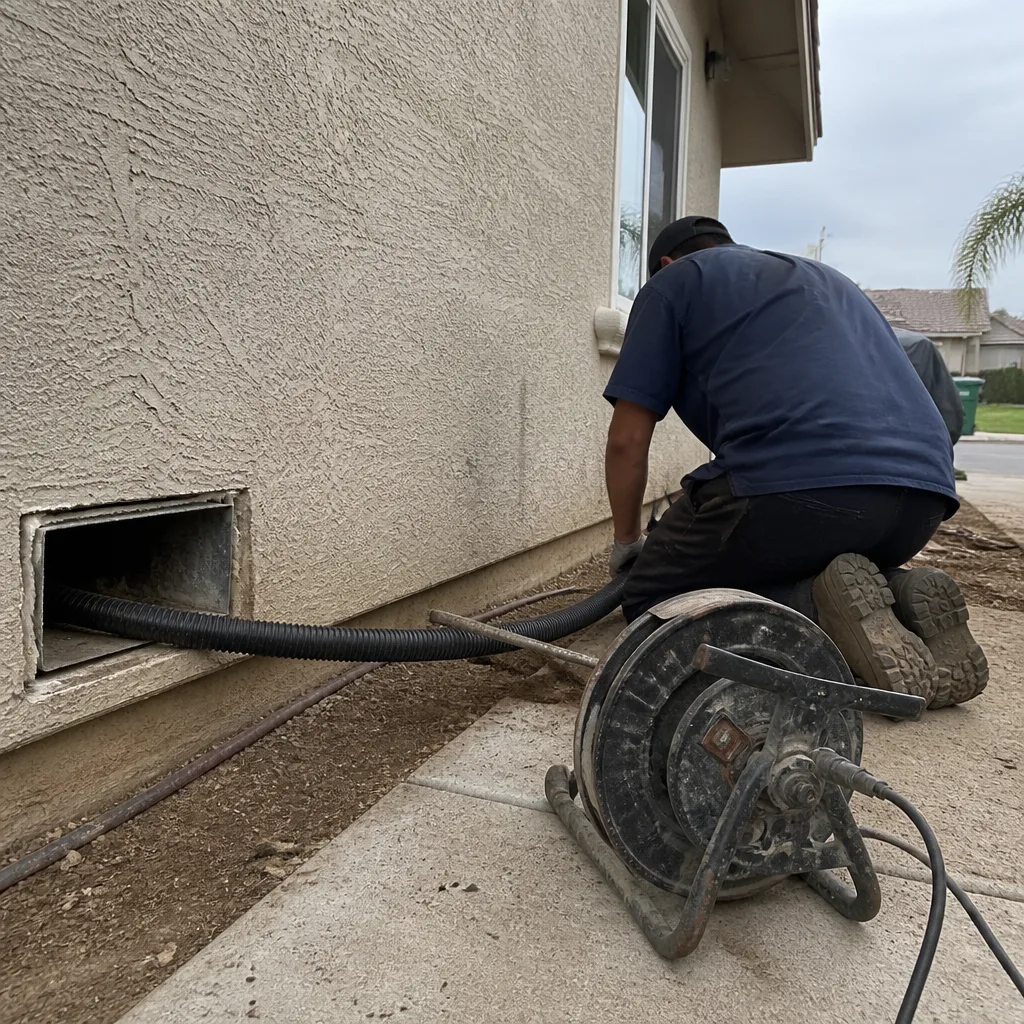 Before
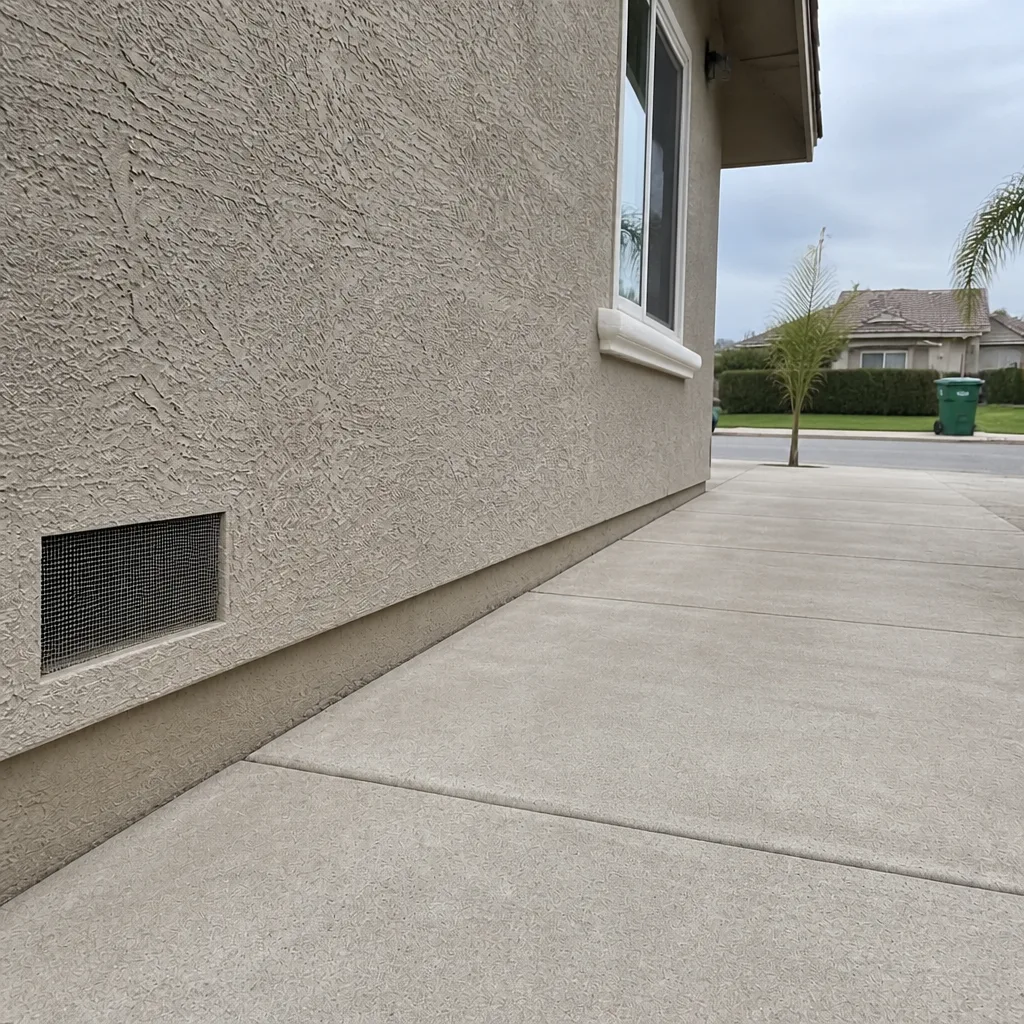 After
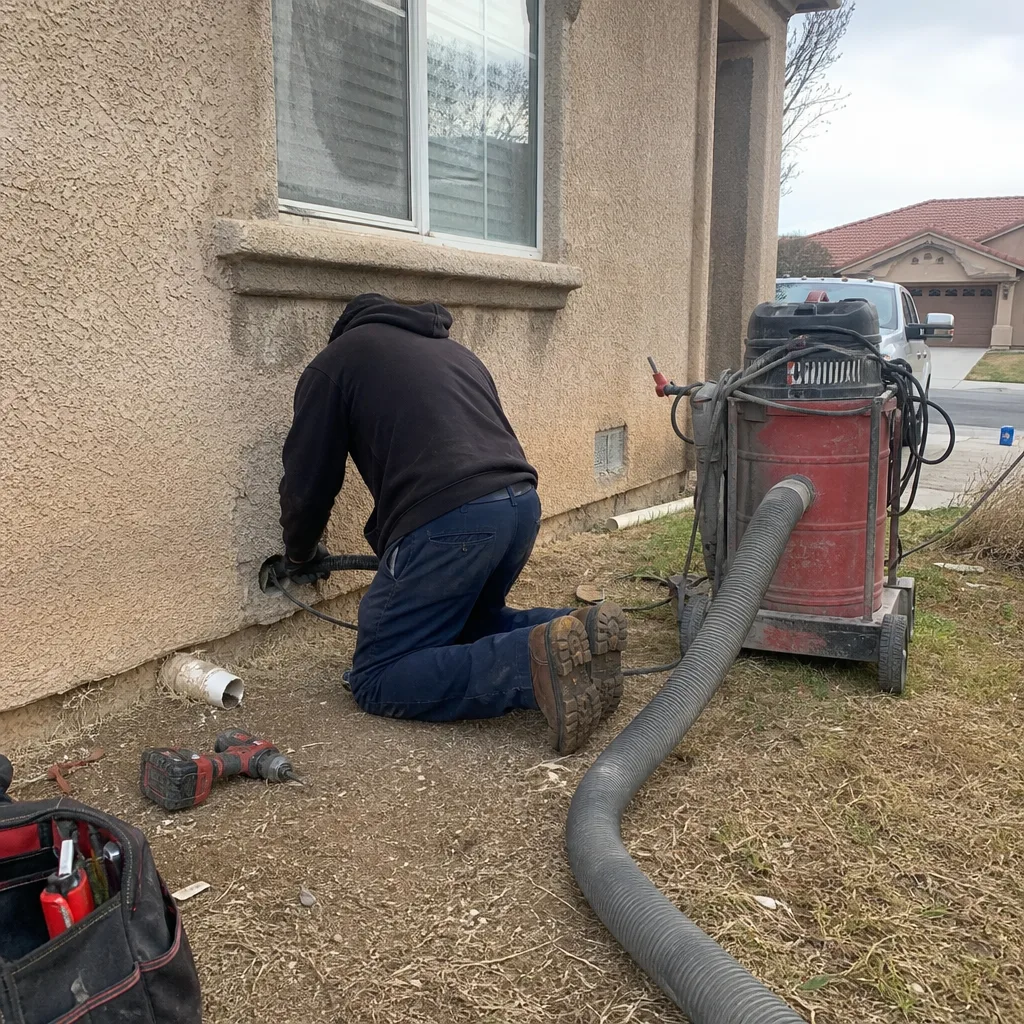 Before
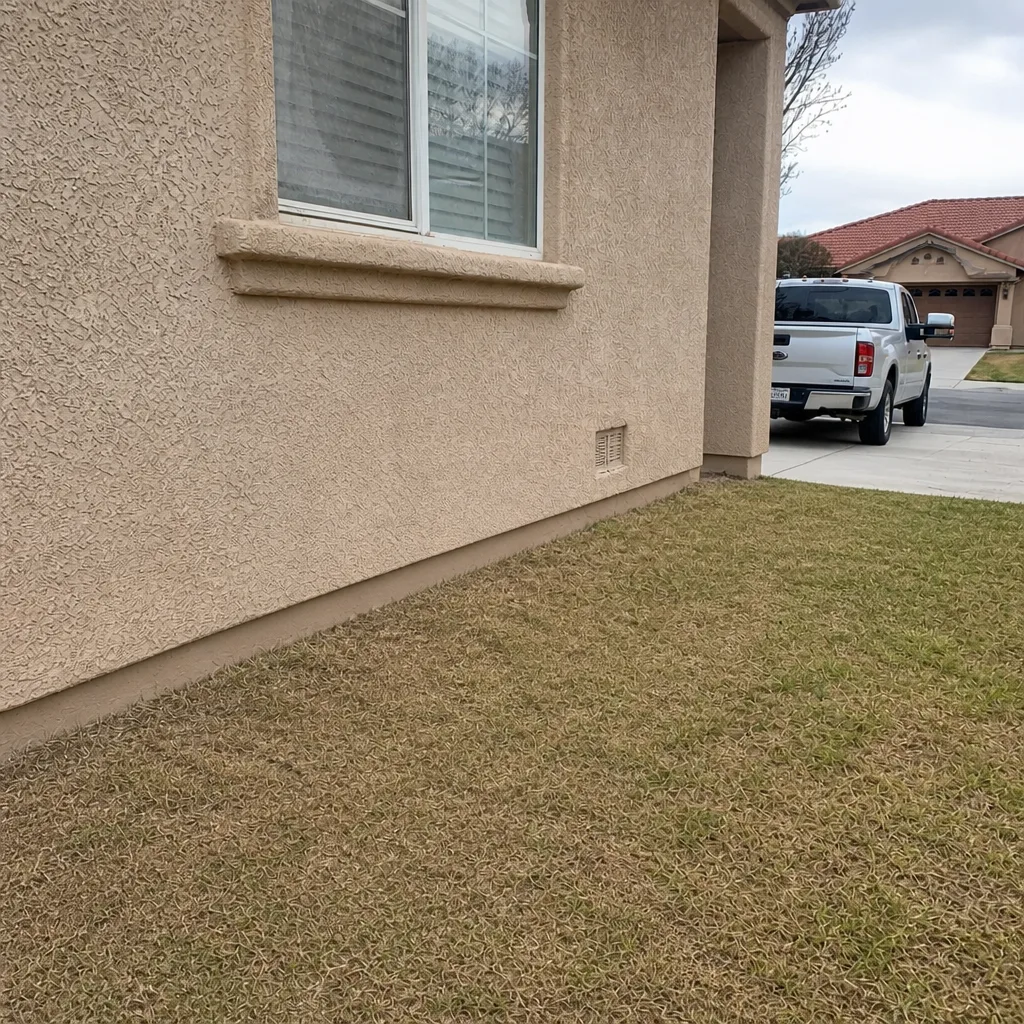 After
 Before
 After
Frequently Asked Questions
Air duct cleaning in Moreno Valley is priced per job by the written estimate, never by a flat rate applied to every home. The scope depends on the size of the duct system, the number of returns, the level of contamination, and whether repairs or dryer vent service are included. Estimates are free. Call (877) 387-1334 and we’ll assess your system and provide a written number before any work begins.
In Moreno Valley’s climate, we recommend a professional inspection every spring and a cleaning whenever the inspection shows contamination beyond what a filter can manage. For most homes, that means a cleaning every one to two years, with some homes in high-dust areas near construction zones or wind-prone exposures needing more frequent service. The filter-tracking method described in this guide is the most reliable way to determine your home’s actual cleaning interval rather than relying on a generic schedule.
Yes. Santa Ana winds pressurize the attic space and drive fine particulate through every gap in the duct system, including unsealed return boxes, loose duct joints, and attic hatch seals. The dust you see on furniture after a wind event is the same dust that entered the return pathway and circulated through the ducts. A visual check of the return box and filter after a wind event tells you whether the winds loaded your system or just the living space.
A household vacuum, even a shop vacuum, cannot reach the full length of a duct run, cannot agitate debris loose from duct walls, and typically pushes more material deeper into the system than it removes. Professional duct cleaning in Moreno Valley requires rotary-brush agitation equipment paired with high-capacity extraction, not just suction. Attempting a DIY cleaning in a finished duct system without the right equipment leaves the contamination in place while adding work and potential damage to flex duct.
In many cases, yes. Smoke odor from a regional fire often embeds in the duct walls and return pathways, not just the filter. Removing that embedded particulate with professional extraction typically reduces or eliminates the odor that persists after the outdoor smoke clears. If the smoke exposure was brief and light, a filter replacement and airing out may be sufficient. If the filter is dark-stained and the smell is detectable at the return, a cleaning is warranted.
Yes. Dryer vent cleaning is one of our three core services alongside air duct cleaning and air duct repair. Lint accumulation in the dryer vent is a leading cause of residential fires, and in Moreno Valley’s dry air, lint can become dangerously built-up faster than in more humid regions. We clear the vent line, inspect the termination point, and confirm airflow is restored before we leave.
The Bottom Line
Moreno Valley HVAC systems don’t get to rest through the year the way systems in milder climates do. Spring construction dust, summer heat-cycling, fall Santa Ana winds, and winter smoke each load the ductwork with a different kind of contamination, and each demands a different response. The filter-tracking method gives you a data-based look at how fast your system accumulates debris, and that data tells you when a professional cleaning is justified and when a simple filter swap will do. Professional-grade equipment, including Rotobrush rotary brush systems and Nikro extraction tools, is the difference between cleaning duct surfaces and merely moving air through them. Start with a spring inspection, track your filter loading through summer, check the return boxes after the first Santa Ana event, and service the return side after any winter smoke exposure. That’s the year-round protocol that keeps a Moreno Valley duct system healthy.
Written by the team at Duct Cleaning Moreno Valley, serving Moreno Valley since 2016.